


Share
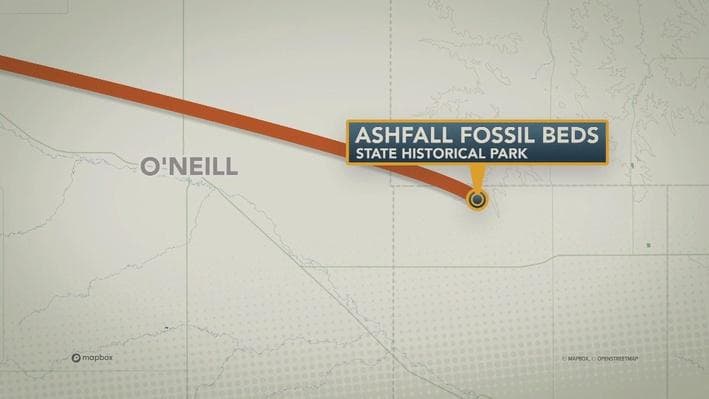

Ashfall Fossil Beds State Historical Park: Nebraska’s Prairie Pompeii
3rd Grade
4th Grade – 5th Grade
6th Grade – 8th Grade
English
Twelve million years ago, a supervolcanic eruption in southwest Idaho deposited glassy volcanic ash across northern Nebraska, resulting in the extinction of much wildlife. The Ashfall Fossil Beds, where remains of barrel-bodied rhinos, three-toed horses, and llama-like camels are interred in volcanic ash, serve as a significant paleontological site. This ancient water hole attracted diverse species seeking hydration, likely drawing animal herds from afar.
Over time, the unique combination of quick burial and mineral preservation mechanisms resulted in some of the finest fossil specimens ever discovered. The site has yielded entire herds of various species, maintaining their spatial arrangement and providing a three-dimensional view of life in that era. Ashfall Fossil Beds today serve as both a scientific treasure and a vivid time capsule, offering insights into the flora and fauna of its ancient ecosystem.
The video resources in this collection tell the story about what happened, why it was unique, where it took place and how this catastrophic event paused the lives of animals, plants and other species so many years ago.